Understanding Super Duplex Stainless Steel 2507: Definition, Properties, Processing, and Cost
By JunWen Liu | Feb .28, 2026
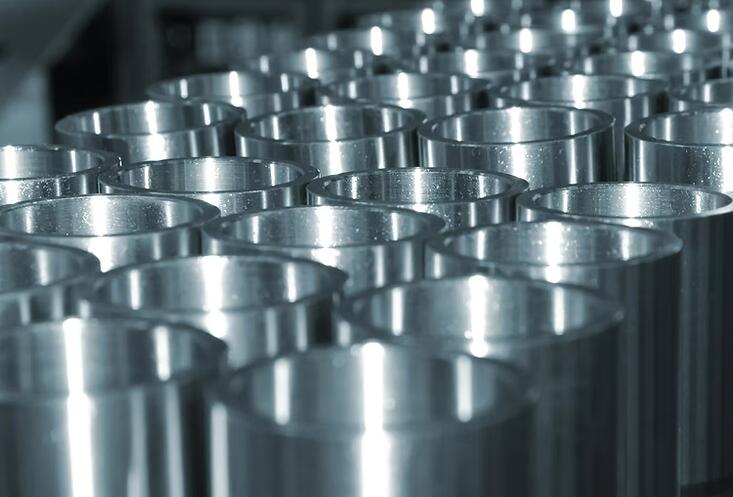

You might be encountering the category of “Super Duplex Stainless Steel” for the first time, and that is perfectly fine if you are unfamiliar with the 2507 grade. However, if I mention Austenitic stainless steel—specifically Grade 316—you have likely heard of this common, corrosion-resistant, high-strength material often used in marine environments and general industrial components.
Super duplex 2507, which features a microstructure of approximately 50% austenite and 50% ferrite, offers double the strength of 316. More importantly, its resistance to chloride stress corrosion cracking (SCC) is exceptional—surpassing 316 by several magnitudes and even outperforming the common duplex grade 2205 (you can think of “Super Duplex” as an evolved version of “Duplex“). Consequently, for deep-sea high-pressure or highly corrosive chemical applications, 2507 is an essential choice. While its price is significantly higher due to the addition of expensive alloying elements like Molybdenum and Nickel, its performance is unmatched by standard stainless steels.
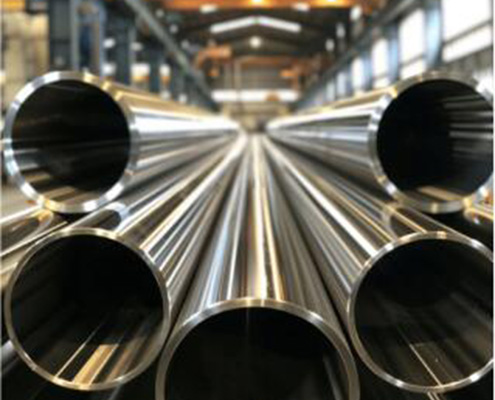
Super Duplex 2507 contains 25% Chromium, 4% Molybdenum, and 7% Nickel. Its chemical composition and its 50/50 austenitic-ferritic structure provide:
However, there are two critical limitations of alloy 2507 super duplex you must know:
Super Duplex 2507 is recognized under various international standards and trade names. The following table provides the equivalent designations for identification:
Table 1: Super Duplex 2507 Equivalent Designations
| Standard/System | Equivalent / Designation |
| USA (UNS) | S32750 |
| Europe (EN) | 1.4410 |
| Trade Name | SAF 2507 |
| Piping Standards (ASTM) | F53 |
| Casting Standards | Grade 5A (CE3Mn) |
Super Duplex 2507 exhibits excellent weldability and can be joined using most conventional arc welding methods, including GTAW (TIG), PAW (Plasma), GMAW (MIG), and SAW (Submerged Arc). Due to its dual-phase microstructure, the primary objective during welding is maintaining the phase balance (approximately 50% ferrite and 50% austenite).
The use of over-alloyed filler metals (such as 2509) is recommended to ensure the weld zone matches the base metal’s corrosion resistance and mechanical properties.
Heat input must be strictly monitored. Insufficient heat leads to rapid cooling and excessive ferrite; excessive heat triggers the precipitation of deleterious intermetallic phases (e.g., sigma phase).
Super Duplex 2507 has a relatively low machinability rating—approximately 25%-30% (with AISI 1212 as the 100% benchmark). It is classified as a difficult-to-machine material for CNC operations, primarily due to its exceptionally high yield strength and intense work-hardening characteristics.
However, 2507 offers a low thermal expansion coefficient of approximately 13.0 µm/m·°C (within the 20-100°C range). This ensures superior dimensional stability during machining, as parts are significantly less susceptible to thermal deformation compared to austenitic grades like 316L.
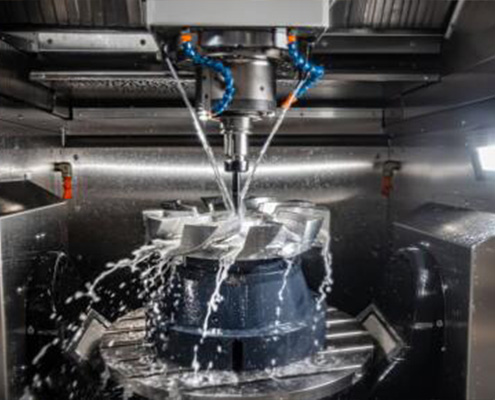
If you need to perform CNC machining 2507, you should:
Cold Forming Challenges
Due to its high yield strength (typically 550 MPa), cold forming processes such as bending or stamping require significantly higher pressure than standard stainless steels. Furthermore, because of its relatively low elongation (approx. 25%), the material is prone to severe spring-back.
Hot Forming and Post-Process Treatment
Hot forming operations—such as hot forging, rolling, extrusion, or stamping—should be performed within the 1025°C – 1230°C range, ensuring uniform heating of the workpiece.
Due to its exceptional resistance to chloride-induced stress corrosion cracking (SCC) and superior mechanical strength, Super Duplex 2507 is indispensable in the following demanding industrial applications, despite its higher material costs and processing difficulty:
The price of Super Duplex 2507 is typically 2 to 3 times that of 316L stainless steel, or even higher (316L is a common stainless steel for coastal or marine applications, also known for corrosion resistance and high strength, but inferior to 2507).
Its cost structure is primarily influenced by the following factors:
Depending on your specific industrial requirements, you can select from the following common supply forms of 2507:
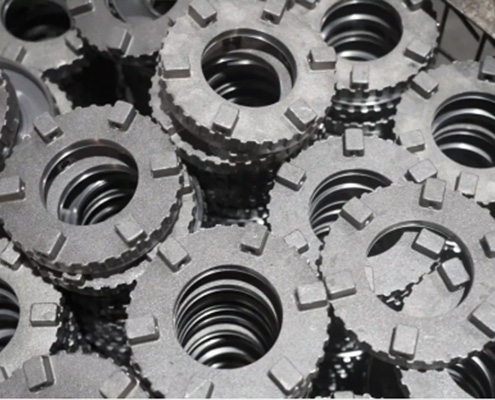
Table 2: Chemical Composition of Super Duplex 2507
| C | Si | Mn | Cr | Ni | Mo | N | P/S |
| ≤ 0.03 | ≤ 0.80 | ≤ 1.20 | 24.0 – 26.0 | 6.0 – 8.0 | 3.0 – 5.0 | 0.24 – 0.32 | ≤ 0.035 |
Table 3: Key Physical and Mechanical Properties of Super Duplex 2507
| Property | Typical Value |
| Tensile Strength (Rm) | 800 – 1000 MPa |
| Yield Strength (Rp0.2) | ≥ 550 MPa |
| Elongation (A5) | ≥ 25% |
| Hardness (Rockwell C) | ≤ 32 HRC |
| Density | 7.8 g/cm³ |
| Elastic Modulus | 200 GPa |
Super Duplex Stainless Steel 2507 achieves an ideal synergy of austenitic corrosion resistance and ferritic high strength through a precise 50/50 phase balance. Although it presents higher processing challenges and initial costs, the structural safety and reliability it provides in deep-sea high-pressure and highly corrosive environments are irreplaceable by conventional stainless steels. While 2507 requires a higher budget and is not recommended for high-temperature (above 300°C) or extreme low-temperature (below -50°C) environments, it remains a premium engineering material well worth considering for high-end applications.
A deep-sea oil and gas equipment manufacturer partnered with VMT CNC Machining to produce a series of core drive shafts for Remotely Operated Vehicle (ROV) control systems. Super Duplex 2507 was specified for these components to ensure the requisite mechanical strength and extreme corrosion resistance necessary for high-pressure, high-salinity subsea environments. The client’s specifications demanded stringent fit tolerances—specifically, dimensional accuracy for the shaft diameters had to be maintained within ±0.01mm, with a surface finish of Ra 0.8 to guarantee critical sealing performance.
During initial production trials, the exceptionally high yield strength of 2507 (typically exceeding 550 MPa) combined with its severe work-hardening characteristics presented significant obstacles. The VMT technical team observed that the material’s extreme toughness prevented cutting heat from being effectively evacuated with the chips. This resulted in localized heat accumulation at the tool tip, leading to rapid plastic deformation of the cutting edge. Furthermore, the immense cutting resistance triggered high-frequency resonance within the machine tool, which compromised the cylindricity of the parts and caused surface roughness to exceed the allowable limits.
To overcome these hurdles, we moved away from conventional machining logic and implemented the following specialized strategies:
The high-pressure coolant system not only instantaneously lowered temperatures in the cutting zone but also forced long, spiral chips to fracture into short segments, preventing them from scratching the finished surfaces. This effectively eliminated thermal dimensional deviations and ensured long-term stability.
 WhatsApp/WeChat/Mobile:
+86-15099911516
WhatsApp/WeChat/Mobile:
+86-15099911516
 Tel: 86-150-9991-1516
 QQ: 939020977
 E-Mail: service@vimetal.com.cn


What is the main difference between Super Duplex 2507 and Austenitic 316L?
The core differences lie in yield strength and chloride corrosion resistance. The yield strength of 2507 exceeds 550 MPa, which is approximately 2.5 times that of 316L (approx. 220 MPa). Regarding corrosion resistance, 2507 has a PREN (Pitting Resistance Equivalent Number) greater than 40, compared to approximately 24 for 316L. This makes 2507 exceptionally stable in chloride stress corrosion cracking (SCC) environments where 316L is prone to failure.
What improvements does Super Duplex 2507 offer compared to typical Duplex 2205?
2507 is an advanced version of 2205, evolved by increasing the level of alloying (higher Chromium, Molybdenum, and Nitrogen content). While 2205 typically has a PREN value around 34-35 and is suitable for moderately corrosive environments, 2507 increases Chromium to 25% and Molybdenum to 4%, pushing its PREN value above 40. This allows 2507 to provide pitting and crevice corrosion resistance that 2205 cannot match in higher salinity, higher pressure, or more severe acidic chemical environments.
Is F53 super duplex?
Yes. Within the ASTM standard system, F53 is the designation specifically used for forgings and fittings corresponding to UNS S32750, which is commonly known as Super Duplex Stainless Steel 2507.
What is the difference between duplex and super duplex?
The primary difference is the PREN (Pitting Resistance Equivalent Number).
Why can’t 2507 be used at high temperatures?
Long-term exposure above 300°C leads to “475°C embrittlement” and the precipitation of the sigma (σ) phase within the microstructure. This causes the material to become as brittle as glass, losing its toughness and rapidly degrading its corrosion resistance.


 Top 5 Strongest Metals: Metals with Highest Ultimate Tensile Strength