Super Duplex Stainless Steel: The Ultimate Guide
By Luca Xie | Dec .29, 2025
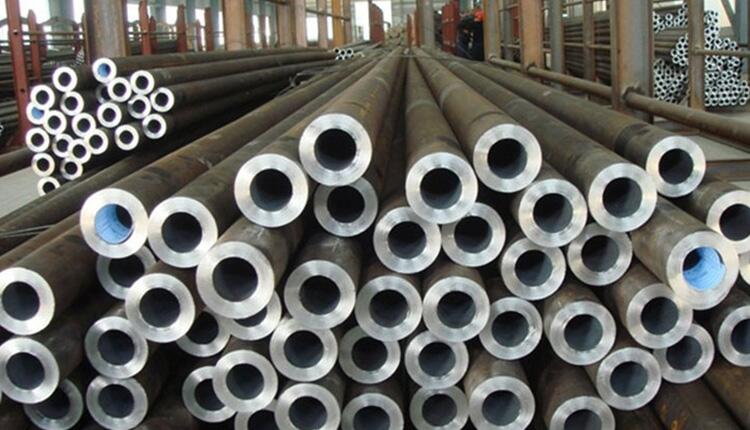

Industries often face parts that corrode, crack, or fail under stress. Standard alloys cannot resist harsh chemicals, marine conditions, or high temperatures. Machining tough materials without losing precision is difficult. Parts fail prematurely, raising costs and downtime. Super Duplex Stainless Steel solves these issues with high strength and durability.
Super Duplex Stainless Steel provides superior corrosion resistance, high strength, and long-term reliability. This guide explains super duplex material grades, chemical composition, super duplex stainless steel properties, and industrial applications. Reading it helps engineers and manufacturers select the right alloy.
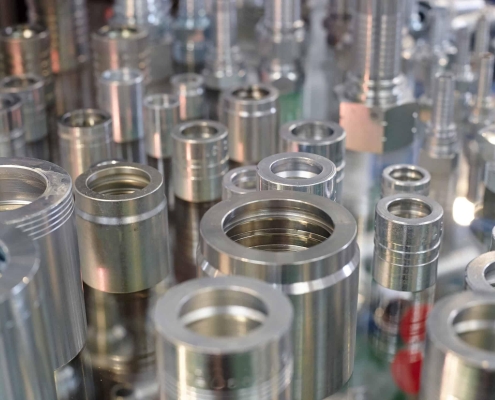
Super Duplex Stainless Steel is a high-performance alloy known for its excellent corrosion resistance and high mechanical strength. It contains elevated levels of chromium, molybdenum, and nitrogen, which enhance durability and resistance to pitting and stress corrosion. Common names include Super Duplex Steel, Super Duplex Stainless, and super duplex material. Its duplex microstructure combines austenite and ferrite phases, providing balanced strength and toughness.
Super Duplex Stainless Steel consists of multiple UNS grades, each with distinct chemical compositions and performance levels. The three most widely used grades are S32750 (Super Duplex 2507), S32760 (Zeron 100), and S32550 (Super Duplex 25Cr), which provide excellent corrosion resistance, high strength, and CNC machinability.
Early versions include S32520 (Historical 25Cr), now mostly replaced by upgraded grades. S39275 is an enhanced variant of S32750 with tighter composition control for improved corrosion resistance. Other grades, such as S32751 and S32752, are regional or specialized variants used in specific industrial applications.
The following table lists Super Duplex Stainless Steel grades and their equivalent material across different standards:
| Common Name | UNS | EN (Europe) | JIS (Japan) | DIN (Germany) |
| Super Duplex 2507 | S32750 | 1.4410 | SCS14A | X2CrNiMoN25-7-4 |
| Zeron 100 | S32760 | 1.4501 | SCS16 | X2CrNiMoCuN25-6-3 |
| Super Duplex 25Cr | S32550 | 1.4412 | SCS13A | X2CrNiMoN25-5-3 |
| Variant of S32750 | S39275 | 1.4410 variant | SCS14B | X2CrNiMoN25-7-4 variant |
| Historical 25Cr | S32520 | 1.4410 historical | SCS12A | X2CrNiMoN24-5-3 |
| Special Duplex | S32751 | 1.4507 | SCS15 | X2CrNiMoN25-7-5 |
| Regional Variant | S32752 | 1.4504 | SCS16B | X2CrNiMoN24-6-4 |
| Super Duplex 2607 | S32654 | 1.4501 variant | SCS17 | X2CrNiMoN26-7-5 |
| Ultra Duplex | S32757 | 1.4411 | SCS18 | X2CrNiMoN25-8-4 |
Super Duplex Stainless Steel generally contains high levels of chromium, nickel, molybdenum, and nitrogen, which give the alloy excellent corrosion resistance, high strength, and toughness. Other elements like copper, manganese, and silicon may also be present in smaller amounts to improve specific properties such as weldability and pitting resistance.
The following table lists the typical chemical composition of the three most widely used super duplex material grades:
| Common Name | UNS | Cr (%) | Ni (%) | Mo (%) | N (%) | Other Elements |
| Super Duplex 2507 | S32750 | 25–26 | 6–8 | 3–5 | 0.3 | Cu, Mn, Si |
| Zeron 100 | S32760 | 24–25 | 6–7 | 3–5 | 0.28–0.32 | Cu, Mn, Si |
| Super Duplex 25Cr | S32550 | 24–25 | 6 | 3–4 | 0.28 | Mn, Si |
This section covers the key properties that make super duplex stainless steel ideal for demanding applications. It highlights microstructure, mechanical strength, corrosion resistance, weldability, toughness and fatigue resistance, and physical and thermal properties.
Super Duplex Stainless Steel has a balanced duplex microstructure composed of Austenite and Ferrite. This combination provides high strength and corrosion resistance while maintaining good toughness. The microstructure also affects machinability and heat treatment responses, important for CNC operations.
This alloy exhibits high yield strength of 550–700 MPa and tensile strength of 750–900 MPa, significantly higher than standard duplex stainless steels. Its superior strength allows engineers to design thinner components without compromising durability, making it ideal for precision CNC machining where both accuracy and toughness are critical.
Thanks to high chromium, molybdenum, and nitrogen content, super duplex stainless steel exhibits excellent resistance to pitting, crevice corrosion, and stress corrosion cracking. Its pitting resistance equivalent number (PREN) ranges from 40 to 45, making it highly suitable for harsh marine, chemical, and oil & gas environments.
Welding super duplex stainless steel requires careful control of heat input and filler materials. With proper technique, it maintains good weldability, preserving both strength and corrosion resistance. Recommended interpass temperature is 150–250°C, and controlled cooling ensures the duplex microstructure stays balanced for CNC-machined assemblies.
The duplex microstructure gives super duplex stainless steel high toughness at ambient and sub-zero temperatures, with impact energy (Charpy V-notch) of 80–100 J at 0°C. It also exhibits high fatigue resistance, with endurance limits around 450 MPa, making it ideal for rotating machinery, pumps, and high-stress structural components.
Super duplex stainless steel has moderate density of 7.8–8.0 g/cm³ and thermal conductivity of 15–25 W/m·K. Its coefficient of thermal expansion is 13–14 ×10⁻⁶ /°C, lower than austenitic stainless steels, which helps maintain dimensional stability during CNC machining and in high-temperature applications.
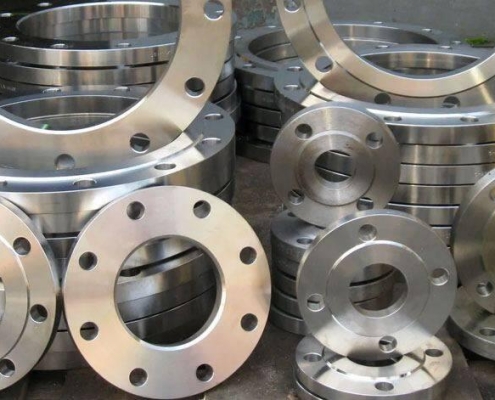
While both duplex stainless steels and super duplex stainless steels share a duplex microstructure, they differ significantly in alloying content, strength, corrosion resistance, and CNC machinability. Choosing the right alloy is crucial for precision CNC parts in demanding environments.
The following table highlights the main differences between duplex stainless steel and super duplex stainless steel.
| Property | Duplex Stainless Steel | Super Duplex Stainless Steel | Notes |
| Key Alloying Elements | Cr 22–23%, Mo 3%, N 0.14–0.20% | Cr 24–26%, Mo 3–5%, N 0.28–0.32% | Higher Cr, Mo, N improve corrosion resistance and strength |
| Yield Strength | 450–550 MPa | 550–700 MPa | Super duplex supports thinner, stronger components |
| Tensile Strength | 650–800 MPa | 750–900 MPa | Higher tensile strength for demanding applications |
| Pitting Resistance Equivalent Number (PREN) | 32–38 | 40–45 | Super duplex resists aggressive chloride environments better |
| Machining Difficulty | Moderate | High | Super duplex requires slower speeds, durable tooling; VMT expertise reduces cost |
| Typical Applications | Piping, pumps, pressure vessels | Offshore platforms, marine, chemical reactors, high-pressure valves | Super duplex used where extreme corrosion and strength are required |
A leading oil & gas company in Norway faced challenges producing subsea manifold components from super duplex stainless steel. The parts required high corrosion resistance for deep-sea conditions and tight dimensional tolerances for assembly. Previous suppliers struggled with premature tool wear, slow machining speeds, and inconsistent surface finishes, causing delays and increased costs.
VMT addressed these challenges with a structured approach:
As a result, the customer received high-quality manifold components with consistent surface finish, precise tolerances, and enhanced corrosion resistance.The client praised VMT for reliability and cost efficiency, noting the parts performed flawlessly in deep-sea conditions.If you also want your parts to achieve the same precision and durability, contact VMT today for a customized solution and free quote.
Super duplex stainless steel combines high strength, excellent corrosion resistance, and toughness, making it suitable for demanding environments.Compared to standard duplex stainless steels, it offers superior performance in harsh chemical, marine, and high-pressure settings.
 WhatsApp/WeChat/Mobile:
+86-15099911516
WhatsApp/WeChat/Mobile:
+86-15099911516
 Tel: 86-150-9991-1516
 QQ: 939020977
 E-Mail: service@vimetal.com.cn


Is super duplex stainless steel magnetic?
Yes, super duplex stainless steel is magnetic due to its ferritic-austenitic duplex microstructure. Its ferrite content provides magnetic properties, unlike fully austenitic stainless steels such as 316. However, magnetism does not affect its corrosion resistance or mechanical strength.
Is 2205 duplex or super duplex?
2205 is a standard duplex stainless steel, not super duplex. It has balanced ferrite and austenite phases with moderate chromium, molybdenum, and nitrogen content. Super duplex steels, like S32750 or S32760, have higher alloying elements, offering superior corrosion resistance and strength for more extreme environments.
Is super duplex better than 316?
Yes, super duplex stainless steel generally outperforms 316 stainless steel in strength, corrosion resistance, and fatigue endurance. Its higher chromium, molybdenum, and nitrogen content provide superior pitting and stress corrosion resistance, making it ideal for marine, chemical, and high-pressure applications where 316 would be insufficient.
What is the ASTM standard for super duplex stainless steel?
Super duplex stainless steels are commonly specified under ASTM A890 / A182 standards. These standards cover forged, cast, and wrought materials and define chemical composition, mechanical properties, and heat treatment requirements for super duplex grades such as S32750, S32760, and S32550.
What are the weaknesses of super duplex stainless steel?
Despite excellent strength and corrosion resistance, super duplex stainless steel has some limitations: it is difficult to machine and weld, may require specialized heat treatment, and can be prone to intergranular corrosion if improperly processed. Its higher alloying content also makes it more expensive than standard duplex or austenitic steels.


 Precipitation Hardening Stainless Steel:Complete Guide