Properties of Carbon Steel: Low vs. Medium vs. High Carbon Steel
By JunWen Liu | Jan .23, 2026
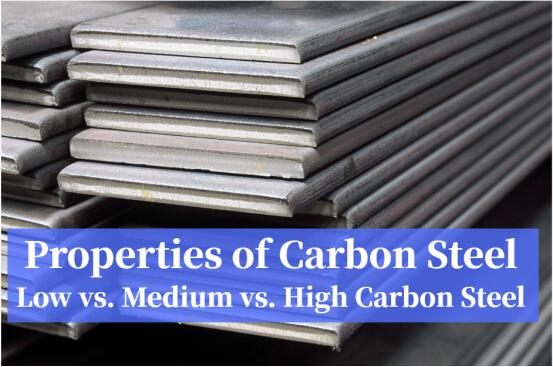

Carbon steel is ubiquitous in engineering and manufacturing, found in everything from structural beams and pipes to precision components like shafts, gears, springs, and cutting tools. However, as a material primarily composed of iron and carbon, the properties of carbon steel vary significantly depending on its carbon concentration. Key characteristics—such as strength, hardness, ductility, magnetism, and response to heat treatment—are all dictated by this composition. These variations, in turn, directly impact the ease of machining (particularly in modern CNC processes) and the ultimate performance of the finished product.
In this article, we will explore the essential properties of carbon steel: the role that carbon content plays; both the shared and distinct properties within the carbon steel family—covering low, medium, and high-carbon varieties; advice for CNC machining carbon steel selection to help you gain a comprehensive understanding of this versatile material.
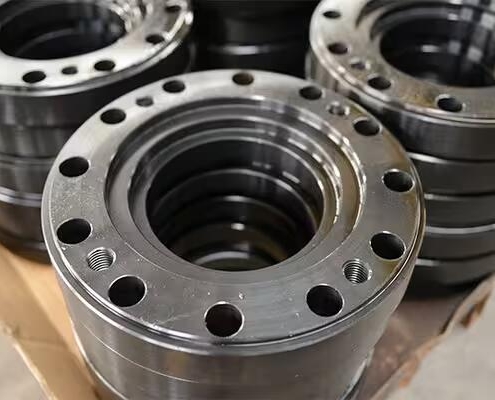
Carbon steel is defined as a metal alloy consisting primarily of iron and carbon. According to AISI/SAE standards, steel is classified as carbon steel when no minimum content is specified for elements like chromium, cobalt, or nickel; the manganese content does not exceed 1.65%;the silicon and copper contents do not exceed 0.60%.
The properties of carbon steel material are almost entirely dictated by its carbon percentage (typically between 0.04% and 2.1%), and carbon steel family include:
Carbon acts as a strengthening agent of carbon steel family. When the carbon content increases, the material undergoes a property trade-off:
While the carbon percentage dictates whether a steel is “low,” “medium,” or “high,” all carbon steels share similar fundamental physical and chemical properties. Understanding these shared properties of carbon steel material can give you a general overview of carbon steel.
Unlike stainless steel, carbon steel lacks a protective chromium oxide layer. When exposed to moisture and oxygen, it reacts to form iron oxide (rust). This makes surface treatments—such as plating, painting, or oiling—a requirement for almost all carbon steel parts.
All carbon steels are magnetic due to its iron content typically accounts for over 98%. This magnetic property of carbon steel is highly beneficial in industrial settings:
Carbon steel is remarkably rigid. It typically possesses a modulus of elasticity of approximately 200 GPa (29,000 ksi) not matter it’s mild, medium, high carbon steel. This means the material can withstand stress and maintain its shape before reaching the point of permanent (plastic) deformation. This rigidity is why carbon steel is the good material for structural frames, heavy-duty machinery, or springs.
Regardless of the carbon content, the density of carbon steel remains stable at approximately 7.85 g/cm³ (0.284 lb/in³). This data provides a reliable basis for calculating the weight and load-bearing requirements of building beams and columns, bridges, and mechanical bases, etc.
Carbon steel reacts predictably but it is sensitive to temperature changes:
The melting point for carbon steel ranges between 1425°C and 1540°C. While higher carbon content slightly lowers the melting point, the material remains highly stable under standard industrial heat, making it suitable for forging and welding (provided the specific grade allows for it).
Because carbon steel is so prone to rusting, it has been engineered to work perfectly with various finishing processes. From a manufacturing perspective, carbon steel is one of the best substrates for:
Carbon steels’ primarily elements iron and carbon are abundantly available in nature, with costs much lower than those of expensive elements required in stainless steel or alloy steel, such as chromium, nickel, or molybdenum. Additionally, its smelting and processing are relatively straightforward, as it does not involve complex alloy formulations. Carbon steel is currently the most widely produced metal material globally. Large-scale standardized production also reduces the cost.
Table 1: Shared Properties of Carbon Steel Family
| Property | Typical Value / Behavior | Practical Impact |
| Corrosion Resistance | Poor | Requires coating, painting, or oiling. |
| Magnetism | Strong (Ferromagnetic) | Ideal for magnetic sensors and industrial sorting. |
| Elastic Modulus | ~200 GPa | High structural rigidity; resistant to deformation. |
| Density | ~7.85 g/cm³ | Predictable weight for engineering calculations. |
| Temperature Limit | Softens above 500°C; Brittleness around -45°C | Not suitable for extreme high-heat or low temperature environments. |
| Cost | Relatively Low | Most cost-effective choice for bulk manufacturing. |
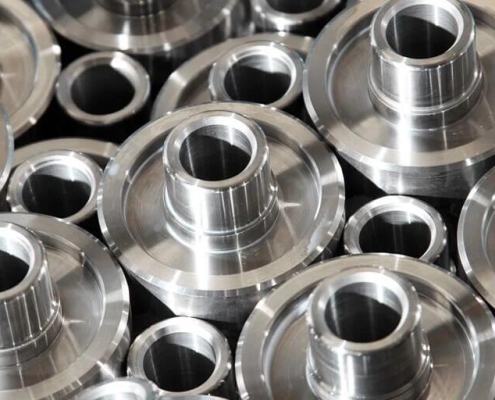
Low carbon steel, or mild steel, is the most widely used form of steel due to its affordability and ease of fabrication. Its carbon content is 0.04% – 0.30% and common grades include ASTM A36, AISI 1018, SAE 1008,ect. Except for the shared properties, mild carbon steel has relatively higher ductility and malleability than medium and high carbon steels due to the carbon content, but this is not absolute; Properties of low carbon steel are also different from each other for their specific grades. Here properties of common grades include ASTM A36, AISI 1018, SAE 1008 are listed in below table, and you can find their differences:
Table 2: Properties of Low Carbon Steel ASTM A36, AISI 1018, SAE 1008
| Property | ASTM A36 | AISI 1018 | SAE 1008 |
| Type | Structural Carbon Steel | General Purpose Mechanical Steel | Low Carbon Drawing Steel |
| Carbon Content (C) | ~0.25% – 0.29% | 0.15% – 0.20% | ≤ 0.10% |
| Common Form | Hot Rolled (Plates, Beams) | Cold Drawn (Bars, Rods) | Cold Rolled (Sheets, Strips) |
| Yield Strength | ~250 MPa / 36 ksi | ~370 MPa due to cold work | ~170 MPa / 25 ksi |
| Machinability | Good (but rough surface)~72% | Excellent (smooth finish)~78% | Poor (Too “gummy” / soft) although moderate data ~55% – 60% |
| Formability | Fair | Good | Excellent (Deep drawing) |
| Weldability | Excellent | Excellent | Superior |
| Typical Applications | Construction, Bridges, Frames | Shafts, Pins, Gears, Bushings | Appliances, Car Panels, Wire |
Medium carbon steel(0.30% – 0.60% carbon content) is stronger than low-carbon steel but more ductile and easier to machine than high-carbon steel. Its most significant advantage is its response to heat treatment (quenching and tempering).
Low-carbon steel (e.g., AISI 1018) has a carbon content too low to harden significantly through quenching, unless surface carburizing is applied; it cannot achieve a substantial increase in bulk strength through through-hardening heat treatment. In contrast, high-carbon steel (e.g., AISI 1095) has such high carbon content that it is extremely prone to cracking or distortion during quenching, resulting in excessive brittleness that limits its use primarily to cutting tools or springs.
Medium-carbon steel is uniquely suited for heat treatment. Upon heating and rapid cooling, its internal microstructure transforms into martensite, which dramatically increases both hardness and strength. By subsequently performing tempering (reheating after quenching), the material’s toughness is restored while maintaining its high strength, providing an optimal balance for mechanical components.
Common grades of medium carbon steel include AISI 1045, AISI 1050, AISI 1144, and for their properties you can check in below table:
Table 3: Properties of Medium Carbon Steel AISI 1045, AISI 1050, AISI 1144
| Property | AISI 1045 | AISI 1050 | AISI 1144 |
| Type | Plain Medium Carbon | Plain Medium Carbon | Free-Machining Steel |
| Carbon Content | 0.43% – 0.50% | 0.48% – 0.55% | 0.40% – 0.48% |
| Key Elements | Iron + Carbon | Iron + Carbon | S (0.24-0.33%) + Mn |
| Yield Strength (Q&T) | ~450 – 600 MPa | ~500 – 650 MPa | ~690 MPa |
| Tensile Strength (Q&T) | ~620 – 800 MPa | ~700 – 900 MPa | ~800 – 950 MPa |
| Toughness (Impact) | Moderate | Moderate (Lower than 1045) | Low (Due to Sulfur inclusions) |
| Heat Treatment | Excellent response to Induction Hardening. | Excellent response; achieves higher surface hardness. | Usually used Pre-hardened; prone to quench cracks. |
| Machinability | Good (Rating: 55%) | Fair (Rating: 45-50%) | Excellent (Rating: 85-90%) |
| Hardenability | Moderate (Shallow) | Moderate (Better than 1045) | Moderate |
| Weldability | Limited (Pre-heat required) | Limited (Care required) | Very Poor (Risk of hot cracking) |
| Typical Use | Gears, Shafts, Axles | Heavy-duty gears, Forgings | Precision Shafts, Hydraulic Parts |
High carbon steel has carbon content of 0.60% – 1.50%, and it often referred to as tool steel; High carbon steel is designed for high hardness and wear resistance.
For high carbon steel AISI 1095, AISI 52100, D2 properties, you can check in below table:
Table 4: Properties of High Carbon Steel AISI 1095, AISI 52100, D2
| Property | AISI 1095 | AISI 1075 | D2 Tool Steel |
| Type | High Carbon Steel | High Carbon / Spring Steel | High-Carbon |
| Carbon Content | 0.90% – 1.03% | 0.70% – 0.80% | 1.40% – 1.60% |
| Tensile Strength (T) | ~620 – 800 MPa | ~550 – 750 MPa | ~1800 MPa |
| Yield Strength (T) | ~400 – 540 MPa | ~380 – 500 MPa | ~1500 MPa |
| Typical Hardness | 55 – 62 HRC | 45 – 55 HRC | 58 – 62 HRC |
| Machinability | Poor (~45%) | Fair (~55-60%) | Poor (~65% in Annealed state) |
| Toughness | Moderate | Excellent | Moderate |
| Heat Treatment | Oil Quench; simple to treat | Oil/Water Quench; very stable | Air Quench; complex/high temp |
| Wear Resistance | High | Good | Superior |
| Typical Use | Knives, Scrapers, Springs | Coil Springs, Saws, Lawn Tools | Stamping Dies, Industrial Shredders |
Here list the comparison table of low-carbon (mild) steel vs medium-carbon steel vs high-carbon steel for quick check:
Table 5: Low-Carbon Steel vs Medium-Carbon Steel vs High-Carbon Steel
| Characteristics | Low-Carbon (Mild)Steel | Medium-Carbon Steel | High-Carbon Steel |
| Carbon Content | < 0.30% | 0.30% – 0.60% | 0.60% – 1.50% |
| Primary Property | Maximum ductility and weldability | Balanced strength and toughness | Extreme hardness and wear resistance |
| Strength (Yield) | Lowest (approx. 200–350 MPa) | Moderate (approx. 400–550 MPa) | Highest (600+ MPa) |
| Machinability | High (easy to cut) | Good (standard machining) | Low (harder to machine) |
| Weldability | Excellent (no preheat needed) | Fair (may require preheat) | Poor (susceptible to cracking) |
| Heat Treatment | Case hardening only | Excellent response to quenching | Full hardening and tempering |
| Common Uses | Beams, car bodies, pipelines, rebar | Axles, gears, railway tracks, shafts | Knives, springs, drill bits, cutting tools |
| Cost | Most affordable | Moderate | Most expensive |
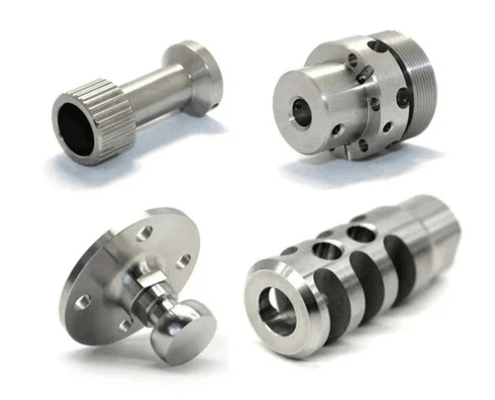
CNC Machining is machining, cutting, drilling or milling a whole piece of material into the shape that you’ve designed on computer lathe path. For the main CNC Machining methods are CNC Turning and CNC Milling.
At CNC VMT CNC Machining Factory, we often advise clients on the properties of carbon steel material relative to their budget and part function.
In conclusion, understanding the properties of carbon steel is essential for designing and manufacturing considerations between raw material selection and high-performance engineering. By recognizing carbon steel carbon steel shared properties and carbon steel family from low-carbon steel, medium carbon steel to high-carbon steel, engineers can make informed decisions that balance part longevity with production efficiency.
An automotive leader approached VMT CNC Machining Factory to produce 1045 medium carbon steel drive shafts for their new EV platforms. The primary technical hurdles included achieving a stringent surface roughness of Ra 0.8μm and maintaining a tight dimensional tolerance of ±0.01mm. In previous trials, the material’s inherent toughness led to significant heat accumulation and “built-up edge” on cutting tools, resulting in surface tearing and thermal distortion that rendered the slender components out of spec.
To address these issues, VMT’s engineering team transitioned the project to our Advanced 5-axis CNC Machining centers. By optimizing the tool path to maintain a constant chip load and utilizing specialized TiAlN-coated carbide tools, we significantly reduced frictional heat. Furthermore, we implemented a high-pressure through-spindle cooling system that evacuated chips instantly, preventing the re-cutting of hardened particles and ensuring the structural integrity of the 1045 steel throughout the milling process.
The implementation of these advanced techniques yielded exceptional, data-verified results in our first batch production run. We successfully improved surface finish quality by 75%, reaching a consistent Ra 0.4μm, and tightened precision to ±0.008mm. Most notably, the optimized cooling and tooling strategy extended tool life from 4 pieces per edge to 30 pieces, representing a 650% increase in tool efficiency. Consequently, the overall machining cycle time was slashed by 35%, from 52 minutes down to just 34 minutes per unit.
By choosing VMT’s specialized Carbon Steel Machining Services, the client was able to eliminate a costly secondary grinding process, reducing the total cost per part by 25%. Our ability to deliver a 99.8% final yield rate ensured that their delivery schedule remained on track.
 WhatsApp/WeChat/Mobile:
+86-15099911516
WhatsApp/WeChat/Mobile:
+86-15099911516
 Tel: 86-150-9991-1516
 QQ: 939020977
 E-Mail: service@vimetal.com.cn


What are the main properties of carbon steel?
The main properties include high strength, excellent magnetic permeability (ferromagnetic), high melting points, and varying levels of ductility based on carbon content.
What are the advantages of carbon steel?
It is highly cost-effective, versatile, and offers a wide range of mechanical properties through heat treatment. It is also more sustainable as it is 100% recyclable.
Will carbon steel rust easily?
Yes. Because it lacks significant chromium, carbon steel will oxidize (rust) when exposed to moisture and oxygen. Surface treatments like black oxide or plating are usually recommended.
What are the properties of AISI carbon steel?
AISI (American Iron and Steel Institute) carbon steels are defined by their 10xx series designation, where the last two digits represent the carbon percentage (e.g., 1020 has 0.20% carbon). They are known for predictable mechanical behavior and standardized alloying limits.
How does carbon content affect the weldability of steel?
As carbon content increases, weldability decreases. High carbon steel is prone to forming martensite, a brittle structure that leads to cracking during the cooling phase of welding.
What is the difference between physical and mechanical properties of carbon steel?
Physical properties are inherent characteristics like density, thermal conductivity, and melting point. Mechanical properties describe how the material reacts to applied forces, such as yield strength, elongation, and hardness.


 Mild Steel vs Stainless Steel: Understanding Key Differences