ABS vs PLA vs PETG: Comparison and Star Rating
By Luca Xie | Nov 03, 2025


Struggling to choose the right filament for your 3D printing projects? Picking the wrong material can lead to poor tolerance, weak mechanical performance, and prototypes that fail functional or visual tests. ABS, PLA, and PETG each offer unique strengths and limitations, so understanding their printability, durability, and machinability is crucial.
This guide breaks down all three filaments across seven key dimensions, Compare ABS, PLA, and PETG to find the ideal filament for your prototypes.Learn about printability, durability, and CNC machinability to ensure high-quality, precise, and functional 3D-printed parts.
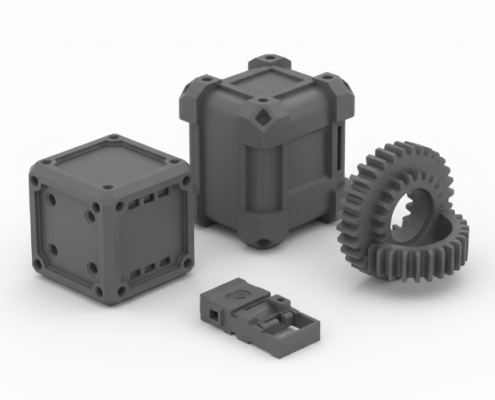
ABS is a petroleum-based thermoplastic known for its toughness, heat resistance, and dimensional stability. It performs exceptionally well in functional prototypes, automotive housings, and mechanical enclosures. Its machinability allows precise CNC milling and tight tolerance control, making it ideal for industrial-grade parts that endure impact and high temperatures. However, ABS filament requires a heated bed and enclosed environment to prevent warping during FDM printing.
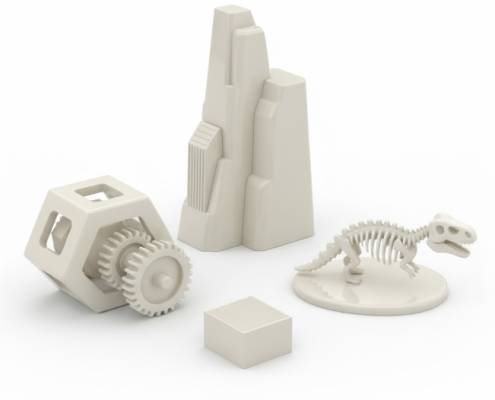
PLA is a biodegradable polymer derived from renewable resources such as corn starch. It’s widely used in 3D printing ABS vs PLA vs PETG projects due to its ease of printing, low warping, and excellent surface quality. PLA is suitable for visual prototypes, design mockups, and educational parts. It also supports light CNC post-processing, such as polishing and trimming, though it’s more brittle under mechanical stress.
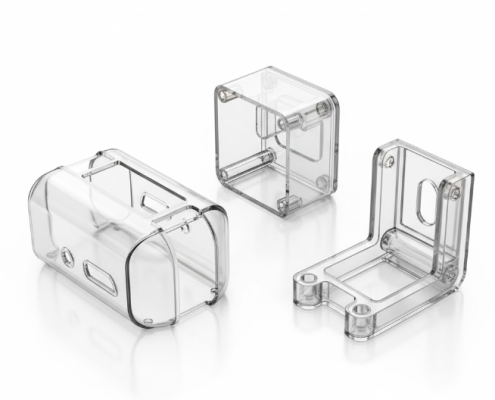
PETG bridges the gap between ABS and PLA by offering balanced toughness, flexibility, and clarity. It’s a glycol-modified polyester, combining ABS’s durability with PLA’s easy printability. PETG filament resists moisture, provides strong layer adhesion, and is easy to CNC finish without cracking. It’s commonly used in protective covers, transparent housings, and durable consumer parts that demand long-term stability.
The comparison of ABS vs PLA vs PETG is organized across key dimensions: strength & durability, printability, surface finish, dimensional accuracy, environmental impact, cost, and application suitability. This approach highlights how each material performs in specific areas.
ABS stands out for its exceptional impact strength and high thermal resistance, making it a preferred material for industrial prototypes, automotive parts, and CNC-machined housings exposed to stress or heat. Its mechanical toughness ensures long-lasting structural stability, which is critical for functional testing and real-world applications where performance consistency matters.
PLA provides excellent stiffness and surface quality but lacks the impact resistance of ABS or PETG. It performs best in lightweight models, aesthetic mockups, and low-stress environments, though its brittleness can cause fractures when exposed to heavy loads or impacts.
PETG offers a balanced blend of strength and flexibility, resisting cracks and deformation under pressure while maintaining reliable form stability. This makes it suitable for functional components and prototypes that need both durability and slight elasticity for moderate mechanical demands.
How to Choose: Select ABS for parts requiring industrial durability and heat tolerance, PLA for rigid, easy-to-print visual models, and PETG for functional prototypes needing a strong yet flexible structure that performs well under moderate stress.
| Dimension | ABS | PLA | PETG |
| Strength & Durability | ★★★★★ | ★★★★☆ | ★★★★★ |
ABS requires precise temperature management to achieve successful prints. A heated bed and enclosed chamber are essential to prevent warping and cracking caused by uneven cooling. While its setup and calibration take more effort, experienced users can produce highly durable, functional parts with excellent mechanical strength once parameters are optimized.
PLA stands out for its outstanding printability and reliability. It prints smoothly at lower temperatures, rarely warps, and adheres well to the print bed, making it perfect for beginners or quick prototyping. Its consistent performance across most desktop FDM printers ensures predictable results with minimal adjustment.
PETG combines the user-friendliness of PLA with the strength of ABS. It prints easily without requiring an enclosure and is less likely to clog nozzles or deform during printing. With good bed adhesion and minimal shrinkage, PETG is ideal for complex geometries and CNC prototypes that demand dimensional stability.
How to Choose: Select PLA for effortless and reliable printing, PETG for consistent results on complex models, and ABS when you have precise environmental control and need high-performance functional parts.
| Dimension | ABS | PLA | PETG |
| Printability & Ease of Use | ★★★☆☆ | ★★★★★ | ★★★★★ |
ABS produces a matte surface that can be easily post-processed through sanding, vapor smoothing, or painting. These finishing options allow ABS parts to achieve a professional-grade appearance suitable for industrial prototypes and end-use housings. When combined with CNC finishing, ABS components can reach exceptional smoothness and precision, making them ideal for projects that require both durability and aesthetic refinement.
PLA naturally delivers a glossy, smooth finish straight from most FDM printers with minimal post-processing. Its vibrant color options and fine surface detail make it perfect for visual models, design validation, and presentation pieces. While not as durable as ABS or PETG, PLA’s print quality and surface shine make it visually impressive right off the printer.
PETG offers a semi-gloss finish with excellent optical clarity, making it suitable for transparent or translucent components such as covers, guards, or display parts. It balances strength with appearance, providing a clean, professional surface that requires minimal finishing while maintaining durability.
How to Choose: Use PLA for immediate visual appeal and smooth finishes, ABS for matte, paintable surfaces that can be professionally refined, and PETG for clear, durable prototypes that combine visual quality with strength.
| Dimension | ABS | PLA | PETG |
| Surface Finish & Appearance | ★★★★☆ | ★★★★★ | ★★★★★ |
ABS offers good dimensional stability once printed correctly, but it is prone to warping and shrinkage if temperature control is inconsistent. To achieve precise results, post-print CNC machining or surface trimming is often used to refine dimensions and maintain tight tolerances. When properly managed, ABS can deliver highly accurate, durable parts suitable for mechanical assemblies and industrial prototypes.
PLA excels in dimensional accuracy due to its minimal shrinkage and low thermal expansion during printing. It maintains consistent size and shape even in long prints, making it ideal for precise prototype manufacturing, snap-fit assemblies, and test-fit components. Its predictable behavior ensures parts fit together accurately without extensive post-processing.
PETG maintains excellent dimensional stability under thermal stress, offering better tolerance control than ABS for extended or complex prints. It resists warping and deformation, producing parts that retain their shape even under moderate heat or load. PETG’s consistent results make it a strong choice for functional parts requiring precision over large build areas.
How to Choose: Select PLA for the highest precision and minimal shrinkage, PETG for stable and reliable results on larger or complex prints, and ABS when post-machining will be used to fine-tune dimensions and achieve perfect tolerances.
| Dimension | ABS | PLA | PETG |
| Dimensional Accuracy & Tolerance | ★★★★☆ | ★★★★★ | ★★★★★ |
ABS is a petroleum-based, non-biodegradable plastic known for its durability and long service life, but it has a higher environmental footprint. While ideal for strong, long-lasting parts, ABS generates more waste and emissions during production and is less aligned with sustainable manufacturing goals.
PLA stands out as the most eco-friendly option. Derived from renewable resources such as corn starch or sugarcane, it is biodegradable under industrial composting conditions. Its low emissions and clean processing make it a preferred choice for sustainable CNC and 3D printing practices, particularly for educational, design, and low-impact applications.
PETG provides a middle ground between environmental responsibility and performance. It is recyclable, durable, and less brittle than PLA, making it suitable for industrial use where both mechanical strength and moderate sustainability are important. PETG’s lower waste rate and long part lifespan contribute to a more balanced environmental profile.
How to Choose: Choose PLA for maximum sustainability, PETG for a balance between eco-friendliness and strength, and ABS when durability and long-term part performance take priority.
| Dimension | ABS | PLA | PETG |
| Environmental Impact & Recyclability | ★★☆☆☆ | ★★★★★ | ★★★★☆ |
ABS is slightly more expensive than common filaments, but its superior mechanical strength and heat resistance justify the cost for industrial and CNC applications. It provides excellent long-term value when durability and performance outweigh initial material expense.
PLA remains the most affordable and widely available option. Its low printing temperature and minimal processing needs make it ideal for educational, visual, or low-volume prototypes where cost efficiency is key.
PETG sits between the two in price, delivering excellent strength, impact resistance, and reduced post-processing requirements. Its strong performance-to-cost ratio makes it a practical choice for functional prototypes and small-batch CNC components.
How to Choose: Select PLA for budget-friendly prototyping, ABS for high-strength, performance-critical parts, and PETG when you need a balanced mix of cost efficiency and durability.
| Dimension | ABS | PLA | PETG |
| Cost Efficiency & Availability | ★★★★☆ | ★★★★★ | ★★★★★ |
ABS is best suited for automotive housings, mechanical enclosures, and long-lasting functional prototypes that benefit from CNC finishing and strong mechanical integrity. Its toughness and heat resistance make it reliable for demanding engineering use.
PLA excels in display models, visual mockups, and educational projects, where ease of use and a smooth appearance matter more than structural strength. It’s the go-to material for quick, precise visual validation.
PETG works perfectly for mechanical parts, protective covers, and components that require both durability and flexibility. Its impact resistance and minimal warping make it ideal for real-world functional testing.
How to Choose: Pick ABS for high-strength and durable applications, PLA for simple, aesthetic prototypes, and PETG for projects needing a balanced mix of strength, flexibility, and ease of production.
| Dimension | ABS | PLA | PETG |
| Application Suitability | ★★★★★ | ★★★★☆ | ★★★★★ |
To provide a quick reference, the following table summarizes the main characteristics and practical differences of ABS, PLA, and PETG. Use this comparison to guide your material selection for prototypes, functional parts, or CNC-machined components.
| Dimension | ABS | PLA | PETG |
| Strength & Durability | Tough and heat-resistant | Rigid but brittle | Strong, flexible, impact-resistant |
| Printability | Needs heat control | Easy to print | Stable, low-warp |
| Surface Finish | Matte, paintable | Glossy, vibrant | Clear, semi-gloss |
| Dimensional Accuracy | Good with CNC finishing | Excellent | Stable under heat |
| Environmental Impact | Non-biodegradable | Eco-friendly | Recyclable |
| Cost Efficiency | Slightly higher | Low-cost | Moderate |
| Application Suitability | Industrial, automotive | Educational, display | Functional, transparent parts |
After evaluating all seven key dimensions, here’s a concise comparison showing how ABS, PLA, and PETG perform across each category. This table allows you to quickly see which material excels in specific areas for both 3D printing and CNC machining applications.
| Dimension | ABS | PLA | PETG |
| Strength & Durability | ★★★★★ | ★★★★☆ | ★★★★★ |
| Printability | ★★★☆☆ | ★★★★★ | ★★★★★ |
| Surface Finish | ★★★★☆ | ★★★★★ | ★★★★★ |
| Dimensional Accuracy | ★★★★☆ | ★★★★★ | ★★★★★ |
| Environmental Impact | ★★☆☆☆ | ★★★★★ | ★★★★☆ |
| Cost Efficiency | ★★★★☆ | ★★★★★ | ★★★★★ |
| Application Suitability | ★★★★★ | ★★★★☆ | ★★★★★ |
At VMT, you can start your ABS, PLA and PETG with confidence. Our team provides high-precision CNC machining and advanced 3D printing capabilities, ensuring your parts meet tight tolerances and high-quality finishes. We deliver both prototypes and production components efficiently. Contact VMT today and turn your designs into reality with expert FDM and CNC services.Contact us now to get a free quote for your Project!
In 3D printing ABS vs PLA vs PETG, the three materials show clear differences in mechanical and practical performance. ABS is tough, heat-resistant, and ideal for CNC machining, but it is prone to warping and requires controlled printing conditions. PLA is rigid, biodegradable, and extremely easy to print, delivering excellent surface quality but limited strength under stress. PETG offers a balance of flexibility, impact resistance, and dimensional stability, combining moderate printability with clarity. These distinctions highlight how each material responds to stress, heat, and finishing, revealing their unique advantages and limitations for prototypes and functional parts.
Are there differences in post-processing for CNC finishing?
Yes. ABS is highly machinable and can tolerate aggressive CNC cutting with minimal chipping. PLA is softer and more brittle, requiring slower cutting speeds to avoid cracking. PETG is flexible and less brittle, allowing smooth CNC milling but may string slightly if tooling speed is too high.
What are the disadvantages of ABS filament?
✅ Can warp or crack during printing if not handled properly.
✅ Gives off styrene fumes, which can irritate the eyes and respiratory system.
✅ More challenging for beginners compared to PLA.
Is PLA or ABS better for beginners?
PLA has been the go-to filament for learning how to 3D print for years because it’s easy to use and available in an endless selection of colors. ABS is known for being the choice when PLA would not work, allowing for stronger parts and hotter operating temperatures.

 3D Printing vs. CNC Machining: Which Is Best for Your Project?